Transition dossier

Electrician

The trade is learned over years, not purchased in a weekend. Electricians install, maintain and repair electrical power, communications, lighting and control systems. The pathway into independent work is shaped by apprenticeship, supervised experience and jurisdiction-specific licensing.

The mature wage is not the apprentice wage.
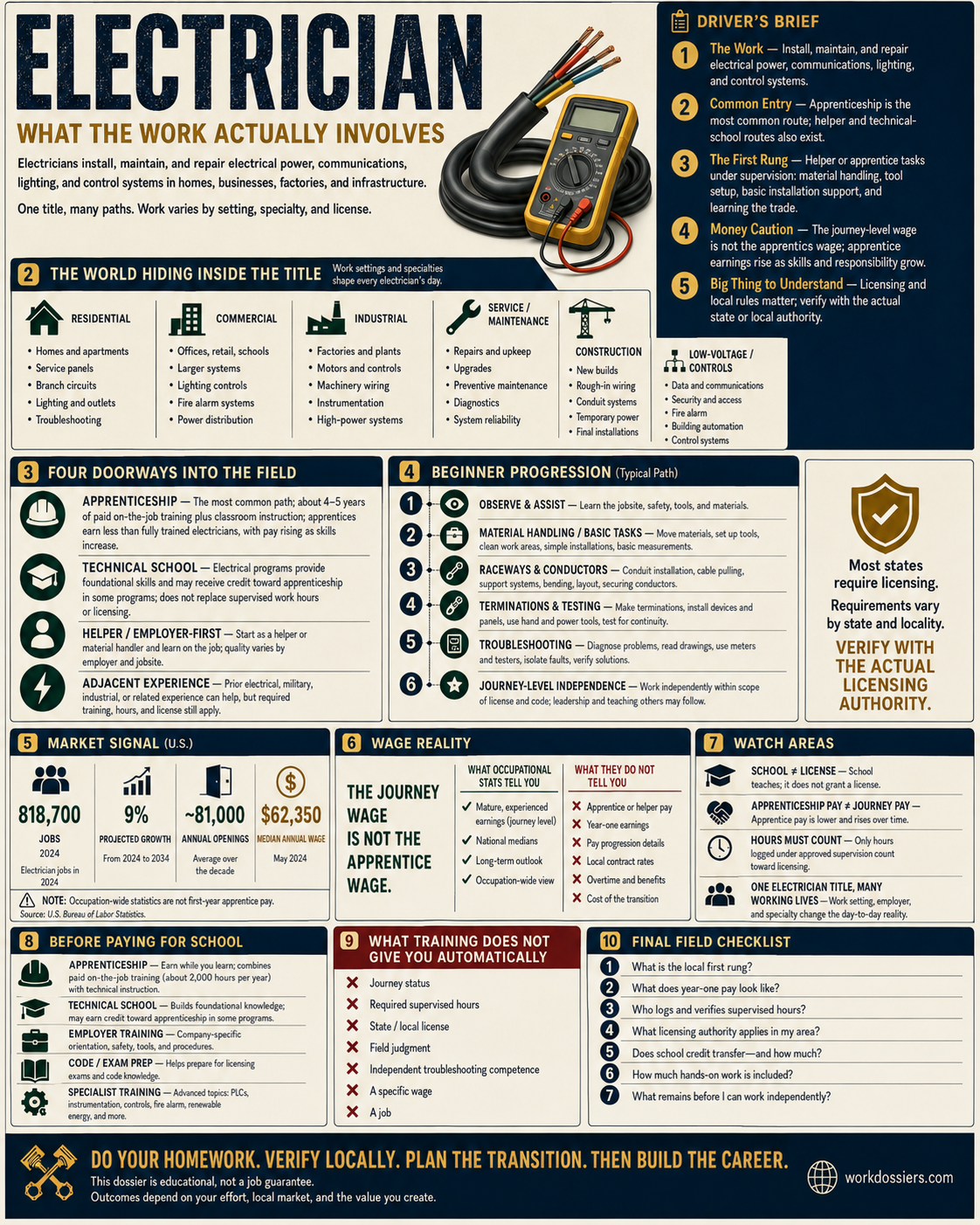
Electrician — Atlas Field GuideThe occupation is learned through supervised work, technical instruction and jurisdiction-specific rules.
The workInstall, maintain, test and troubleshoot.Power, lighting, distribution, communications and controls.
Common entryApprenticeship dominates.Paid OJT plus technical instruction; technical school may support the route.
First rungHelper/apprentice work.Material handling, conduit, cable, basic installation, safety and supervised tasks.
Money cautionThe journey wage is not the apprentice wage.Progression matters during the transition.
Hidden branchesResidential · commercial · industrial · service · construction · low-voltage/controlsSame trade family, very different working lives.
Legal realityHours must count.Licensing and accepted supervised experience vary by jurisdiction.
Training cautionSchool ≠ license.Verify credit and requirements with the actual authority or apprenticeship sponsor.
Learn the trade. Verify the path. Plan the transition.

Atlas gives the pathway at a glance. The dossier below slows down where it matters.

What the day is actually like

Hands-on work where the setting changes the job.

Residential service, commercial construction and industrial electrical work can feel very different. These are the recurring conditions to compare.

PeopleCrew + customer mixConstruction can be team-heavy; service work may mean more one-on-one customer contact.
RhythmProject work or troubleshootingNew installation follows a build sequence; service work can be more reactive and diagnostic.
PhysicalActive and sometimes awkwardStanding, ladders, conduit, cable, tools and cramped access can be part of the day.
EnvironmentJobsites, homes, plantsThe branch determines whether you work in finished spaces, active construction or industrial facilities.
ScheduleUsually structured, sometimes extendedConstruction deadlines, shutdowns or service needs can bring early starts, overtime or off-hours work.
FocusSequence + verificationSafe installation and troubleshooting depend on reading plans, codes, circuits and test results carefully.
Tools + computersMostly tools, with digital supportHand tools and meters dominate, alongside drawings, test equipment and increasingly digital documentation or controls.
When mistakes matterSafety firstElectrical errors can create shock, fire, equipment and code-compliance consequences.
The title is broad. The branch determines much of the actual working day.

1. What the work actually involves

Electricians install, maintain and repair wiring, equipment and control systems. Depending on the job, that can mean reading blueprints, installing conduit and cable, connecting panels and devices, testing circuits, diagnosing faults, repairing systems and verifying that work meets applicable electrical codes.

InstallationRaceways, conductors, panels, lighting, devices and distribution equipment.
Testing & diagnosisMeters, continuity checks, fault tracing, drawings and code-driven verification.
Maintenance & serviceRepairs, upgrades, preventive work and troubleshooting existing systems.
Controls & specialtiesFire alarm, communications, controls, industrial systems and other specialty areas.
One title, many working lives. Residential service, commercial construction and industrial controls can feel like different jobs inside one trade family.

2. The world hiding inside “electrician”

ResidentialHomes, apartments, panels, branch circuits and troubleshooting.
CommercialOffices, retail, schools, larger distribution and building systems.
IndustrialFactories, motors, machinery wiring, controls and instrumentation.
Service / maintenanceExisting systems, diagnosis, repairs and upgrades.
ConstructionNew builds, rough-in, conduit, temporary power and final installation.
Low-voltage / controlsData, communications, security, fire alarm and building automation.

3. Four doorways into the field

ApprenticeshipPaid on-the-job training plus technical instruction, commonly over four or five years.
Technical schoolTheory, safety and foundations. Some programs may earn apprenticeship credit.
Helper / employer-firstStart around the jobsite, learn basics and move toward formal training.
Adjacent experienceMilitary, industrial, construction or prior electrical experience may help depending on program rules.
School ≠ license. Technical school can teach theory and skills. It does not by itself create journey status, substitute for required supervised hours, or satisfy every jurisdiction's licensing rules.

4. What the beginner rung looks like

Observe & assistMaterial handlingRaceways & conductorsTerminations & testingTroubleshootingJourney-level independence

Early apprenticeship can include material handling, tool setup, basic installation, conduit work, pulling cable, supporting experienced electricians and learning jobsite safety.

Hours have to count. Where supervised experience is required, the hours only help if they are documented and accepted by the applicable program or authority.

5. Market signal — strong, but not a promise

818,700 jobsU.S. electrician employment in 2024.
9% growthProjected 2024–34 growth.
~81,000 openingsProjected average annual openings.
$62,350 medianNational median annual wage in May 2024.
These are occupation-wide statistics. They do not describe first-year apprentice pay, local scales, overtime, benefits or transition cost.

6. Wage reality

The journey wage is not the apprentice wage.
Occupational statistics can tell youThey cannot tell you
National median and wage distributionYour first-year apprentice rate
Long-term occupational economicsYour local progression schedule
Established-worker earningsBenefits, overtime or transition cost

7. Licensing and legal entry requirements

Most U.S. states require electricians to be licensed, and requirements vary by state and locality. Tests commonly cover the National Electrical Code plus applicable state or local codes.

Verify with the actual licensing authority. A national dossier can explain the structure. It cannot tell every reader how many hours, which exam, which license class or which local rules apply.

8. Before paying for school

  1. Check the local apprenticeship system.
  2. Map first-year pay. Record wages, raise steps, benefits and expected hours.
  3. Verify the licensing path. Use the actual authority, not a school sales page.
  4. Ask what school credit transfers.
  5. Inspect hands-on training. Find out what students physically wire, bend, test and diagnose.

9. Serious training routes

ApprenticeshipPaid OJT plus technical instruction.
Technical schoolTheory, safety and foundations.
Employer trainingCompany-specific methods and procedures.
Code / exam prepLicensing exam and code preparation.
Specialist trainingControls, PLCs, fire alarm, renewables and industrial systems.

Mike Holt Enterprises is one commercial education example already identified for this project. No affiliate link is wired because the final commercial link has not been supplied.

What training does not give you automatically

  • Journey status
  • Required supervised hours
  • A state or local license
  • Field judgment
  • A specific wage
  • A job

Sources

What this dossier is for. It explains the work, apprenticeship, licensing structure and transition economics. It does not decide whether a particular person should become an electrician.